PPWR + EPR: Understanding the Packaging and Packaging Waste Regulation

Requirements, deadlines, and what the new EU packaging rules mean for your bottle, pump, tube, and box.

IN BRIEF

The most important things to know about PPWR in 30 seconds

08/12/2026

PPWR applies directly throughout the EU, including Denmark. Packaging must have a declaration of conformity and technical documentation.

2030

All packaging must be recyclable in grades A–C and contain a minimum percentage of recycled plastic.

Mono

Mono-material packaging is the simplest path to a high recyclability grade.

What is PPWR?

At Packwise, we offer a wide range of cosmetic packaging. Our varieties of packaging for cosmetics include everything from the latest generations of airless pump systems, elegant cream jars, cream tubes, and bottles with spray and pump solutions for your product.

Packaging often plays a significant role when consumers choose a personal care or cosmetic product. There are so many cosmetic products available, making it crucial for your packaging to stand out on the store shelf. In fact, more than 70% of consumers make their purchase decision when they are standing in front of the shelves in the store. In such a buying situation, your product has only about three seconds to grab consumers’ attention. So, how can you make your product stand out, positioning it as the preferred choice in consumers’ minds?

Before · Directive 94/62/EC

Each country created its own rules based on the directive. Requirements varied from market to market.

Now · Regulation (EU) 2025/40

Applies directly and uniformly in all EU countries. One piece of packaging that meets PPWR requirements can be sold throughout the EU.

How does PPWR relate to Danish producer responsibility?

Extended producer responsibility continues. PPWR sets requirements for the packaging itself, while producer responsibility determines who pays for collection and recycling.

Timeline: When do the rules apply?

Timeline 2025-2040 with the deadlines that matter most for cosmetics, pharma, and cleaning products.

  • Aug 12, 2026
    APPLIES NOW
    Declaration of conformity and technical documentation. Limits for PFAS in food contact materials and heavy metals.
  • Aug 12, 2028*
    Common labeling of materials.
  • Jan 1, 2030
    Recyclable in classes A–C. Minimum recycled plastic content. Maximum 50% empty space. Ban on certain single-use formats.
  • Jan 1, 2035
    Recyclable at scale in practice.
  • Jan 1, 2038
    Only classes A and B are permitted.
  • Jan 1, 2040
    Higher requirements for recycled plastic and reuse.

* Or 24 months after the Commission's implementing act.
Who is covered by PPWR?

Anyone placing packaging or packaged goods on the EU market. Under PPWR, the "manufacturer" is often the brand owner—the company whose name appears on the product, even when production is handled by a supplier.
Brand owners · Manufacturers · Importers · Distributors · Webshops
‍

How recyclable is your packaging?

PPWR categorizes packaging into classes A, B, and C based on its recyclability. Packaging in class C is considered non-recyclable. Use the traffic light system to see where your packaging stands.
Green · good

Class A and B

At least 95% (A) or 80% (B) of the packaging is recyclable

Meets the requirements for 2030 and 2038

Typical design

  • Bottle, pump, and cap in the same plastic, e.g., PP
  • All-plastic pump without a metal spring.
  • Clear or light-colored plastic
  • Label, glue, and print that do not interfere with recycling

How to keep it green

  • Keep the monomaterial when the design is updated
  • Check new labels and colors before they are put into use

Yellow · on the way

Class C

At least 70% of the packaging is recyclable

Permitted from 2030, but not from 2038

Typical design

  • The main material is recyclable, but one component is made of a different material
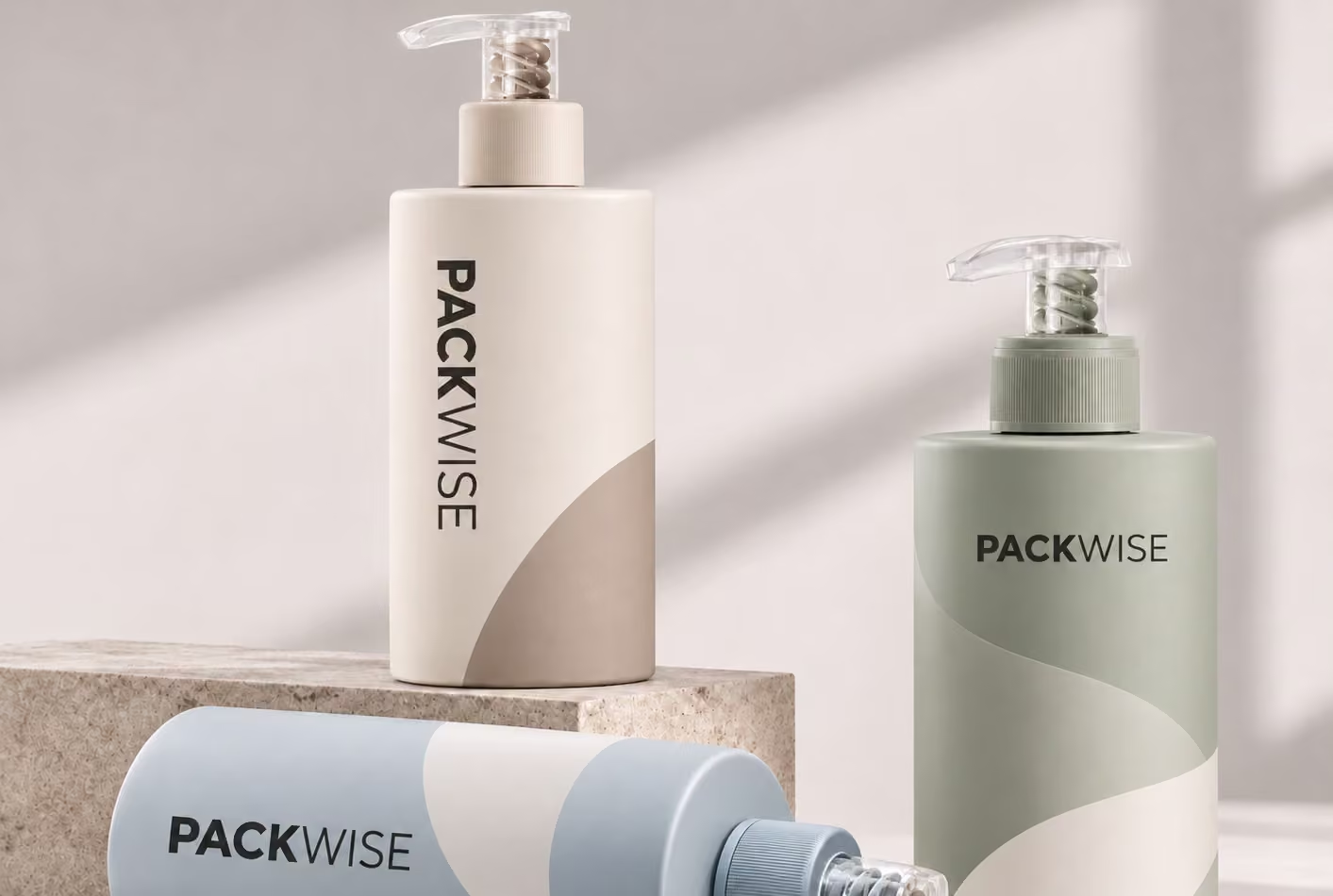
  • Pump with metal spring on a plastic bottle
  • Dark or heavily colored plastic
  • Label or sleeve covering a large part of the packaging

How to make it green

  • Switch to an all-plastic pump
  • Choose lids and pumps made of the same plastic as the bottle
  • Lighter color and smaller label

Red · must be changed

Below class C

Less than 70% of the packaging is recyclable

Considered non-recyclable. Cannot be sold from 2030

Typical design

  • Multiple materials that cannot be separated
  • Black plastic with carbon or metallic ink
  • Laminates and coatings
  • Large amounts of glue or ink

How to improve it

  • Switch to monomaterial
  • Avoid black plastic with carbon and metallization
  • Get the components reviewed one by one

Extended producer responsibility fees will be tiered based on the packaging's recyclability class. Improved recyclability can therefore also lead to lower fees.

What requirements does PPWR set?

PPWR sets four types of requirements for packaging. Here is the overview.

A-C

Recyclability

From 2030, class A-C; from 2038, only A-B. The class depends on the entire packaging.

10-35%

Recycled plastic


From 2030: 30% in contact-sensitive PET, 10% in other contact-sensitive plastic, 35% in other plastic.

50%

Less packaging

Minimum possible weight and volume. From 2030, a maximum of 50% empty space.

Now

Documentation

Declaration of compliance and technical documentation. Limits for PFAS and heavy metals.

Have your products checked against the four requirements. We will review your packaging and provide you with a concrete proposal for what needs to change and what can stay.

What does this mean for your bottle, pump, and box?

Packaging must be recyclable, contain recycled plastic, be as small and lightweight as possible, and be free from harmful substances like PFAS in food contact.
The requirements apply to every single component. Here is what that means for the parts we produce the most.

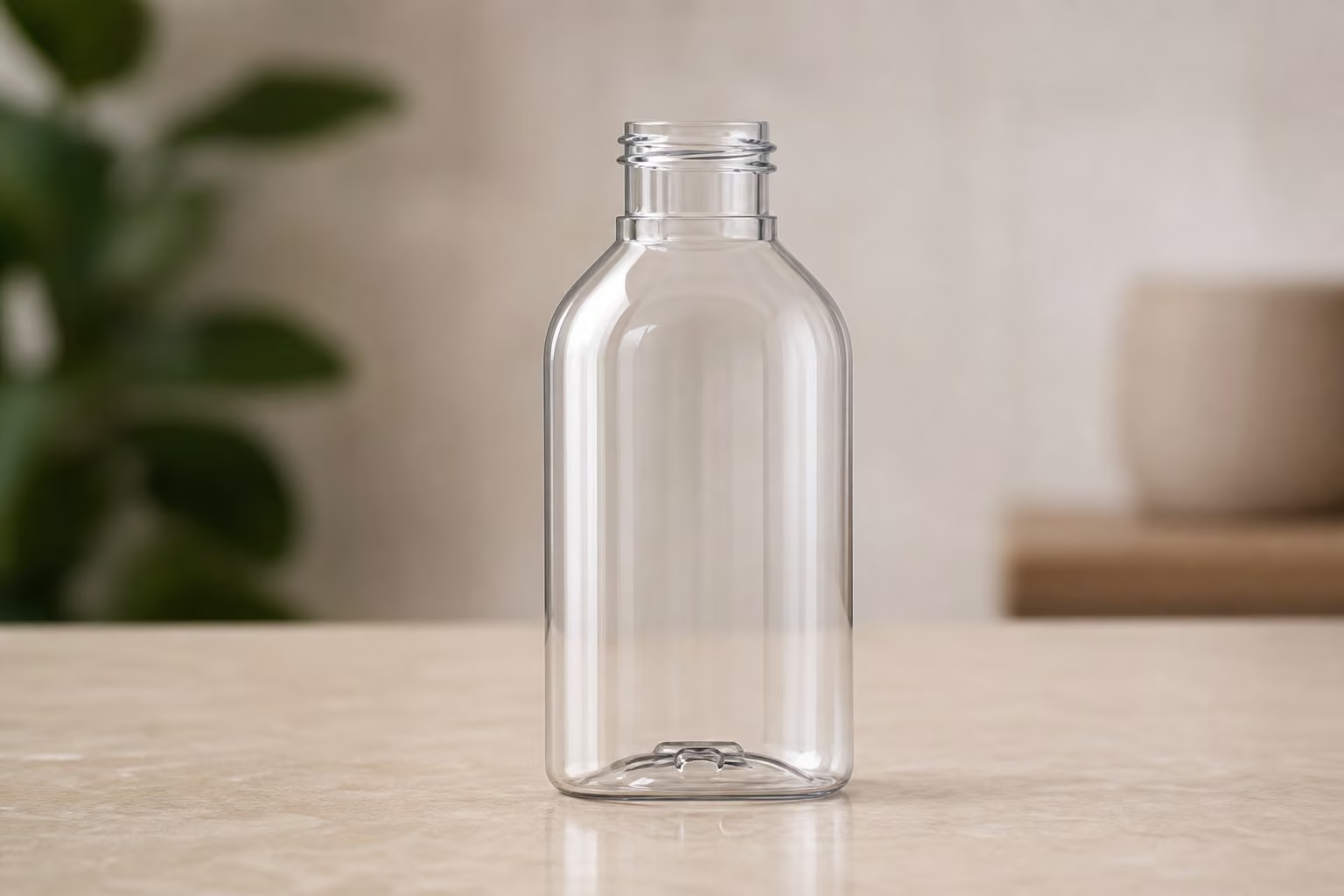
Pump and dispenser
Metal springs make the pump difficult to recycle.
Choose a spring made of pure plastic.
Bottle
PET, rPET, HDPE, and PP are easy to recycle.
Hånd holder en hvid kosmetisk pumpeflaske med sort låg mod en væg med vinduesskygger.
Cap and closure
The cap should be made of the same material as the
bottle so that everything can be sorted together.
Tube
A tube made entirely of PE provides a high
recyclability class.
Flaske med hårserum med luftpumpe og åben etiket der viser ingredienser, anvendelse og fordele.
Label and print
Glue and ink must not hinder recycling.
Direct printing or removable labels are best.
Box and secondary packaging
Maximum 50% empty space from 2030. Packaging must have the lowest possible weight and size.

How do monomaterials help meet PPWR?

When the entire packaging is made from one material, e.g., only PP, it can be sorted and recycled in one piece. This provides the highest recyclability class, and there are fewer materials to document in the declaration of conformity.
More materials
Monomaterial

Our products

Arrow leftArrow right

You don't need to become an expert in EU regulations. We already are.

We know the requirements, our products, and our factories. You get packaging that complies with the regulations while still selling.

UPDATE
Your existing products

We review your product range and identify the components that need to be replaced. Often, the bottle can remain the same.

REPLACEMENT
New bottle or dispenser

Monomaterial and all-plastic, e.g., pumps without metal springs. You receive samples first.

DOCUMENTATION
For extended producer responsibility and PPWR

Technical drawings, weight, and material descriptions, collected directly from our factories.

DESIGN
New design that stands out

Use the new requirements as an opportunity to create a look that stands out on the shelf.

Glossary: PPWR terms explained

Recyclability class

Class A–C based on how well the packaging can be recycled. At least C from 2030.

Monomaterial

Packaging where all parts are made of the same material, e.g., only PP or only PE.

Empty space

Empty space in packaging not occupied by the product. Maximum 50% from 2030.

Declaration of conformity

The manufacturer's declaration that the packaging complies with PPWR. Required from August 12, 2026.

Contact-sensitive packaging

Packaging for items such as food, pharmaceuticals, and cosmetics with lower requirements for recycled plastic.

rPET

Recycled PET plastic. Counts towards the requirement for recycled content.
Nærbillede af bølgende bakker dækket af tæt grøn mos i blødt lys.

Stay up to date

Stay up to date with the latest news, industry trends and inspiration
Thank you, your submission has been received
Oops! Something went wrong while submitting the form.
Tre brunalege klodser stablet oven på hinanden med en grå cirkel omkring den midterste klods.
Production control
Grøn markeringstegn med et hvidt flueben i midten.
Security of delivery
Lysende glødepære med filamentglød indeni.
Danish company
Illustration af fem personer, der repræsenterer et team med talebobler over, som viser kommunikation.
Flexible collaboration