I'm 16. April 2022
In this post, we will introduce how the production in the ABC of packaging takes place. First you have to go through the different stages of design and development, then the packaging itself has to be produced. There are many different types of material, each of which has different processes.
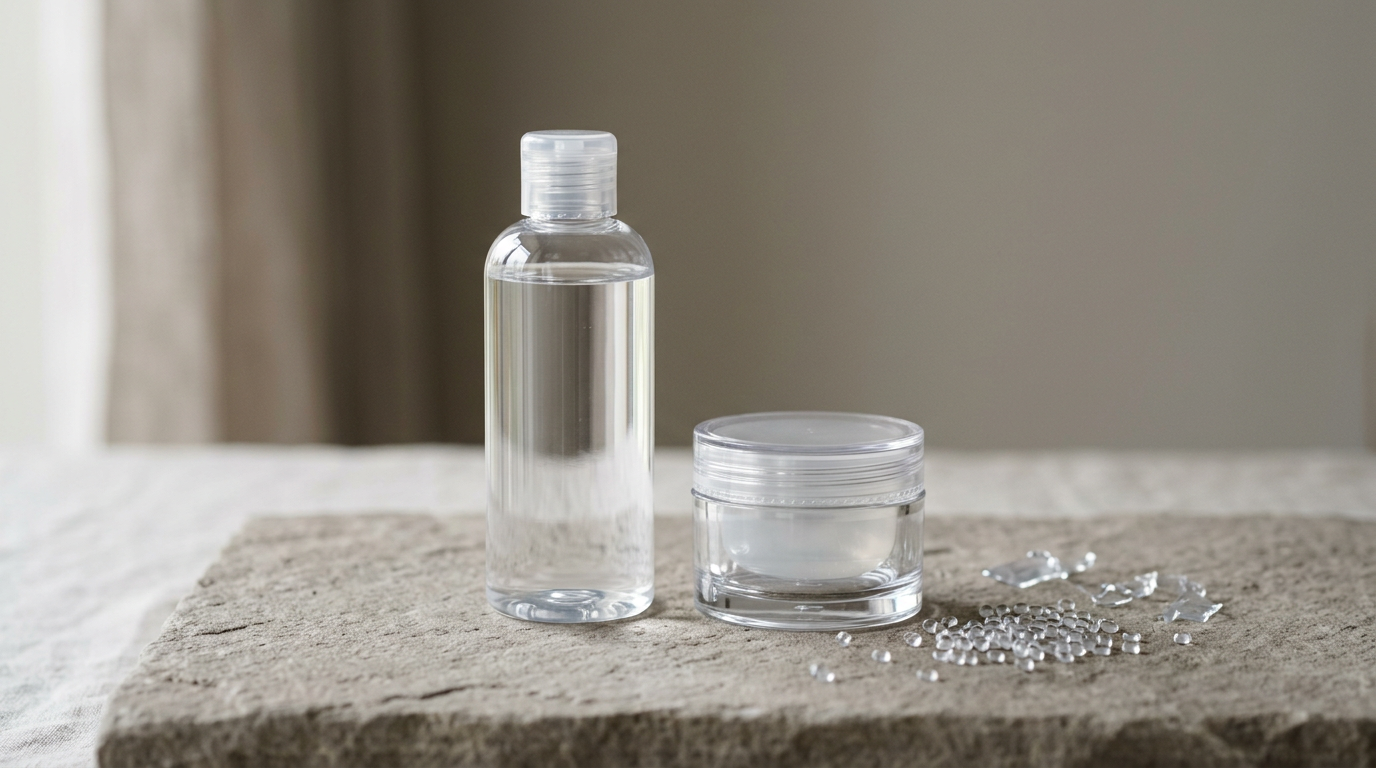
A popular material for packaging is plastic. If you are interested in using plastic, there are a number of different types of plastics that can be used for packaging:
The materials are not the same and therefore they have different procedures and processes in their production and origin. All our products at Packwise can be selected in the different types of plastics. You will find our many different packaging types and products including airless dispensers, trigger sprayers and much more. product catalog.
This type of packaging is produced from fossil materials. Crude oil is one of the most widely used materials for the production of plastics.
Crude oil contains a lot of other substances, so it can only be used to make plastics if it is refined.
The crude oil is then broken down into smaller petroleum products made up of different molecules. One of the oil products is called naphtha, and it is an essential product for making new plastics.
Plastic is made up of a lot of small molecules, also called monomers. Plastic produced from one type of monomer is referred to as a pure plastic material and is therefore easier to sort and recycle.
Different types of plastic can be produced. The different types of plastics can often be seen in the form of small triangles with numbers on the plastic product.
You can see what the different triangles stand for as well as the advantages and disadvantages of the different types of plastic hereto.

Bioplastics can be divided into two groups: the bio-based plastic and the biodegradable plastic. Both types can be produced from a biomass such as sugar cane, corn or other plants.
The bio-based plastic is produced only from biomass, while the biodegradable plastic boats can be made from biomass, oil or gas or a mixture.
After all, the production of bioplastic packaging immediately sounds like a good alternative to the production of virgin plastic. However, the production of bioplastics actually has some negative consequences:
Despite some drawbacks, bioplastics often emit less CO2 than plastics made from fossil materials. Since plants take up CO2, bioplastics emit only the amount of CO2 that plants absorbed before they were made into plastic. It can therefore be difficult to determine whether bioplastic is better than virgin plastic.
Recycled plastic, also called recycled plastic, is old plastic that has been recycled and converted into new plastic.
In other words, existing plastics are used for the production of “new” plastic, which is more environmentally friendly than the production of new virgin plastic from fossil materials.
By producing recycled plastic instead of virgin plastic, you save both raw materials, while emitting less CO2 and reducing the loss of plastic.
When recycled plastic is recycled, the quality deteriorates slightly each time. Therefore, a bit of virgin plastic can be added during the production of recycled plastic.
Because recycled plastic comes from virgin plastic, it is a material that is not produced from a sustainable source. In addition, it can also be expensive to have the plastic collected and processed.
Ocean waste plastic is a term for all the plastic that has ended up in the oceans around the globe and is recycled into the production of new plastic. Thus, you cannot start by producing ocean waste plastic, as the term covers other types of plastic that end up in the sea. More people and organizations have started collecting plastic from the oceans for recycling.
The process of using ocean waste plastic is very similar to how the process of recycled plastic proceeds. However, it is more difficult to recycle plastic collected from the sea, as the quality can fluctuate.
Plastic pollution in the oceans is actually one of the biggest environmental problems of our lifetimes. It pollutes our drinking water and it affects the many wildlife that inhabit the world's oceans. It is therefore important that action is taken to reduce the amount of plastic waste in the oceans.
Several concepts have been developed to promote the collection of the plastic waste. Among other things, the Dutch concept”The Ocean Cleanup” an efficient method of collecting plastic waste, then recycling as much of the collected waste as possible into new products.
Several companies and organizations are also focusing on recycling plastic waste from the oceans. Adidas, for example, has launched a new training shoe that is made from garden waste. You can read more about the Adidas launch over at Bærdygtigemballage.dk
The plastic products that often end up as waste in the world's oceans are typically single-use products. Disposable plastic tableware is rarely designed to be used more than once, and the consumer does not attach the same value to the product as other plastic products do. Disposable plastic is therefore quickly discarded and some of it unfortunately ends up in the wild.
In 2021, the EU banned several types of plastic cutlery and straws, helping to prevent the problem. Despite the fact that several companies and organizations are developing concepts and products to reduce plastic waste in the oceans, it is essential that plastic production be cut in the first place.
After the production phase of one of the above types of packaging, the products go on to consumption phase.
If you are interested in learning more about the different types of plastic, you can find much more information under sustainable packaging at www.packwise.dk. You can also read more about these types of plastics and watch videos at Bærdygtigemballage.dk
Do you have any questions for us?
Please do not hesitate to contact us immediately. Contact us here
We have a lot of different products and packaging.
Explore our product catalogue. Go to product catalog

You are always welcome to contact us. Whether it is sparring, a concrete inquiry or ideas for cooperation and development, we are happy to engage in dialogue and look at the possibilities together.





.avif)

.avif)

.avif)