By Packwise · Published October 27, 2026
Sunscreen packaging is the container that protects sunscreen from light, heat, and air, while making it easy to apply. The most common types are tubes, spray bottles, pump bottles, and sunscreen sticks. The right choice depends on the consistency of the formula, where the product will be used, and how your customers prefer to apply it.
Sunscreen places higher demands on packaging than most skincare products. It is used on the beach, in bags, and in hot cars, where sand, water, and heat are part of the environment. Therefore, the packaging must seal tightly, withstand temperature fluctuations, and provide even dispensing, even with sandy fingers.
At the same time, the market is large and competitive. Statista expects global revenue for sun protection skincare to reach approximately 13.2 billion dollars by 2027 (Statista). On a crowded shelf, the packaging is often the first thing the customer notices.
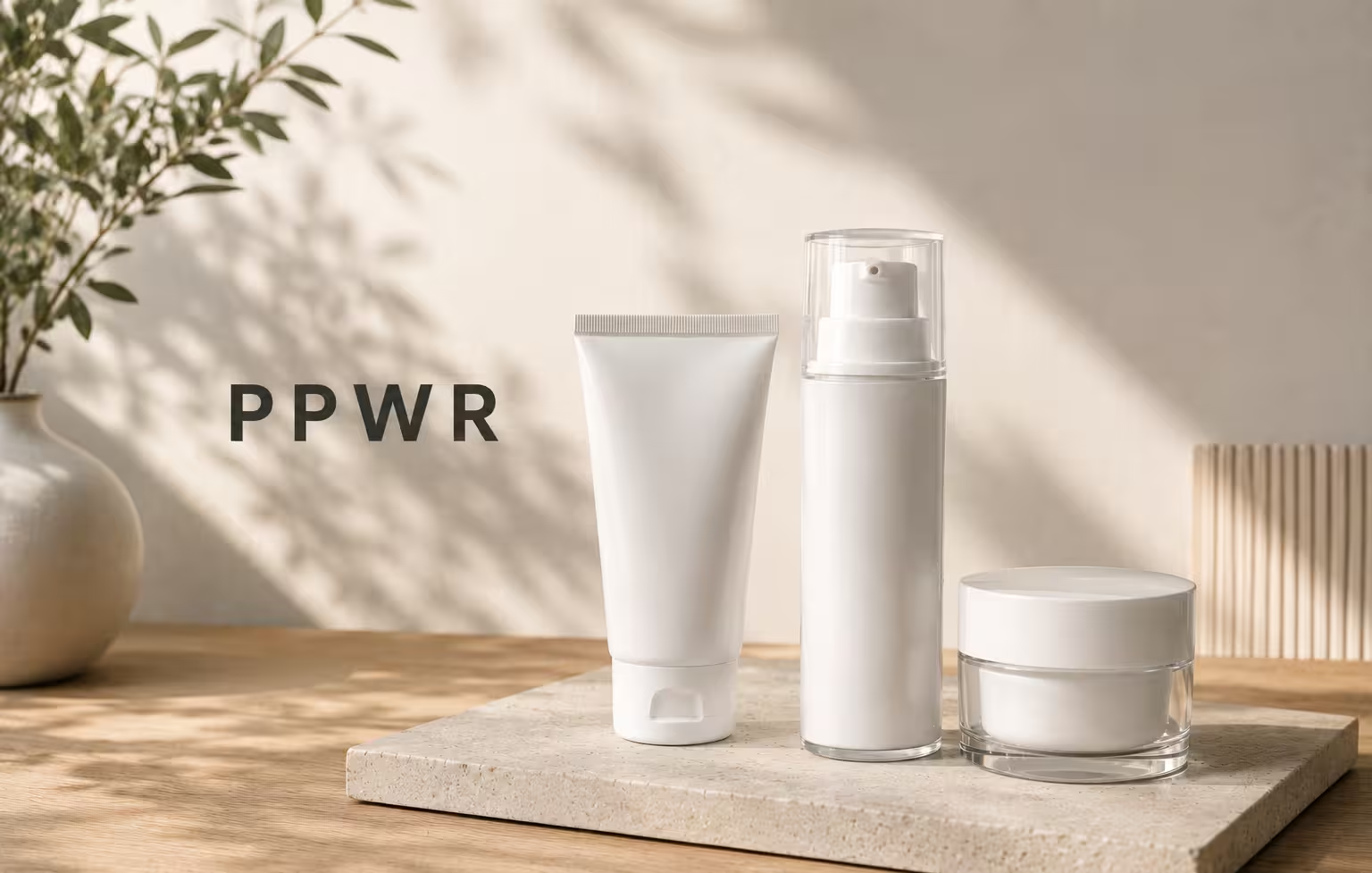
The tube is the classic choice for sunscreen and lotion. It is lightweight, takes up little space in a bag, and can be squeezed almost completely empty. A flip-top lid can be opened with one hand, and the tube is suitable for creamy formulas with medium to high viscosity.
A spray bottle makes it quick to cover large areas like the back and legs, and it is popular for children and for reapplication throughout the day. A fine mist requires a thin, liquid formula, while a standard finger sprayer can handle a slightly thicker lotion. Choose a sprayer with a locking function so the bottle does not leak in your bag.
A pump bottle dispenses the same amount every time and is practical for large family-sized bottles and for facial sunscreen used at home. For sensitive formulas, an airless pump can better protect the contents from air, as no air enters the bottle during use.
A sunscreen stick is sunscreen in solid form in a twist-up stick, much like a deodorant. It is popular for the face, ears, nose, and lips because it can be applied precisely without making fingers greasy, and it cannot leak in a bag. The formula must be firm and stable, even in hot weather.
There is no single best packaging. The tube is the most versatile choice for creams and lotions, the spray bottle is fastest for large areas, the pump bottle provides precise dosage, and the sun stick is ideal for the face and small areas. Start with the consistency of the formula and the situation in which your customers use the product.
A sun stick is sunscreen in solid form housed in a twist-up applicator. You turn the wheel at the bottom to push the stick up and apply it directly to the skin. It does not leak, takes up little space, and is popular for the face, ears, nose, and lips, especially on the go and for sports.
Typically 9–12 months from the initial brief to the product being on the shelf. The time is spent on choosing the format and material, samples, stability tests with the formula, decoration, and production. If you want to launch for the summer, you should therefore brief your packaging supplier as early as the autumn of the previous year.
Yes. Under the EU's Packaging and Packaging Waste Regulation (PPWR), all packaging sold in the EU must be designed for recycling by 2030, and there will be minimum requirements for recycled plastic content. We recommend choosing monomaterials, where the body and lid are made of the same type of plastic, to make the packaging easier to sort and recycle.
Book a non-binding meeting with our packaging specialists.
About the author: Packwise are packaging specialists with extensive experience in cosmetic and pharmaceutical packaging. We advise brands on choosing packaging solutions from the concept phase through to production.
You are always welcome to contact us. Whether it is sparring, a concrete inquiry or ideas for cooperation and development, we are happy to engage in dialogue and look at the possibilities together.