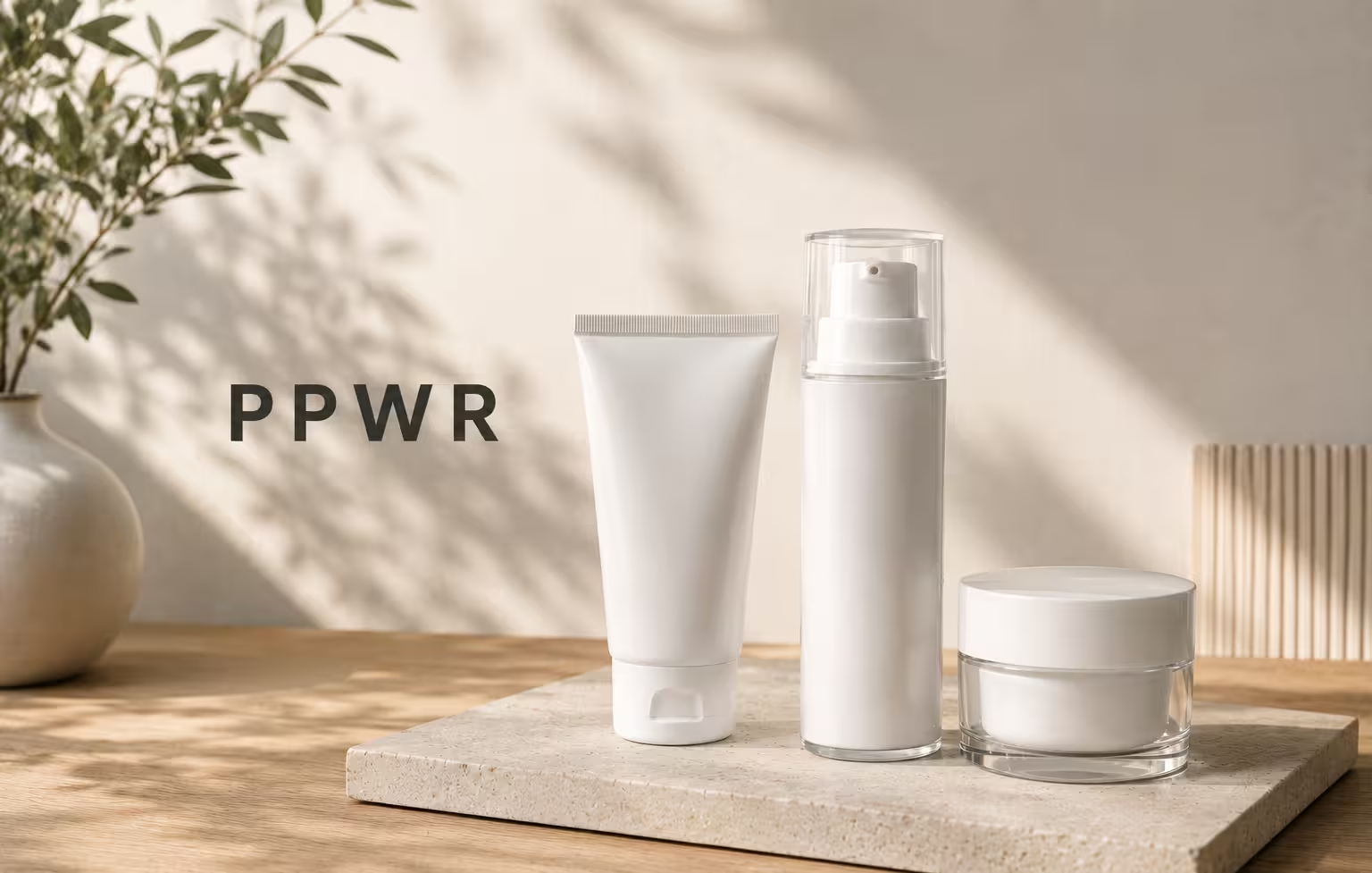
Refill packaging is packaging designed to be refilled and used multiple times. Instead of discarding the entire product package, the consumer buys a refill cartridge or refills the container directly. This reduces waste, lowers material costs over time, and strengthens customer loyalty through a natural reorder cycle.
Last updated: July 2026 · Written by Packwise
Refill packaging consists of two parts: a durable outer container and a replaceable refill unit. When the product is used up, you only replace the refill unit. You keep the outer container and use it again.
It differs from traditional single-use packaging, where the entire container is discarded after use. The model is widespread in cosmetics, skincare, and personal care, where airless refill systems, glass bottles with refill cartridges, and refill pouches are the most commonly used formats. However, the solution is spreading to cleaning products, food, and industrial packaging.
Two things are driving the development: regulation and economics.
The EU's new Packaging and Packaging Waste Regulation (PPWR) came into force in February 2025 and, as of August 2026, requires that packaging reuse systems be established. From 2030, the requirements will be tightened with concrete reuse targets for transport packaging and beverage packaging. In short, refill is no longer optional for companies in the European market.
The market is following suit. According to The Business Research Company , the global refill packaging market reached 59.5 billion USD in 2026 and is expected to hit 78 billion USD by 2030.
1. Lower material costs over time
When the outer container is reused, you only produce and transport the refill unit. For brands with a high reorder frequency (skincare, cleaning, haircare), the savings can be felt after just a few cycles, both in terms of materials and shipping.
2. Stronger customer relationships
The refill model creates a natural reorder cycle. The customer keeps the original packaging and returns for refills. This opens up a subscription format that gives you more predictable revenue and closer contact with your customers.
3. Compliance with the EU's PPWR
From 2030, the PPWR sets concrete reuse targets for packaging. If you have already implemented refill solutions, you avoid having to adapt under time pressure and position your brand as a frontrunner in sustainable packaging.
Refill packaging isn't for everything. It makes the most sense when:
For products with low reorder frequency or strict hygiene requirements that complicate the reuse of the outer container, the model is less obvious.
The initial cost is typically higher than with single-use packaging because you are designing a two-part system with a durable outer container and a replaceable refill unit. Over time, however, the cost drops significantly, as only the refill unit is produced and transported for reorders. Most brands reach break-even within the first few reorder cycles.
Yes, when the system is designed correctly. Airless refill systems protect the product from air and bacteria in the same way as traditional airless packaging. The refill cartridge is factory-sealed and replaced in its entirety, so the product is never exposed during the change. This makes the solution suitable for sensitive formulations.
From August 2026, the EU's PPWR will require reuse systems to be in place. The most stringent reuse targets for transport and beverage packaging take effect from 2030. The earlier you begin the design process, the more control you have over material selection, suppliers, and the overall transition.
You are always welcome to contact us. Whether it is sparring, a concrete inquiry or ideas for cooperation and development, we are happy to engage in dialogue and look at the possibilities together.





.avif)
.avif)
.avif)