In brief: PET bottles are lightweight, strong, and transparent plastic bottles primarily used for liquids. They are a good choice when the product needs to be durable, the packaging can be kept simple, and the bottle ends up in a high-collection system like a deposit scheme. They are a poorer choice when the bottle contains many materials, dark colors, or large sleeves, which make sorting and recycling difficult.
PET bottles are somewhat like the "classic" packaging solution. You see them everywhere, and they usually work really well. But if you're looking at a product and thinking "should we choose PET?", the answer isn't just yes or no. It's about what you're selling, how the bottle is designed, and where it ends up afterwards. Here's a quick overview you can use right away.
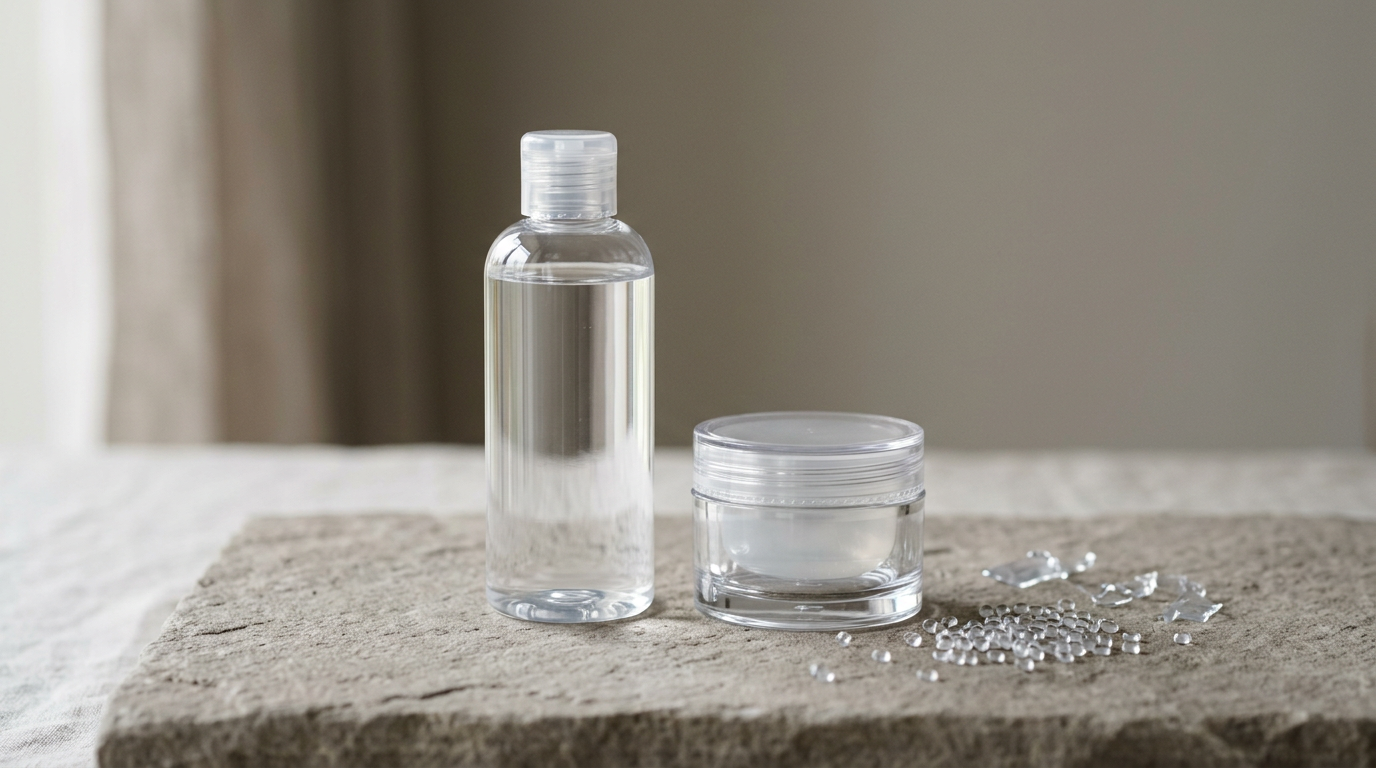
PET stands for polyethylene terephthalate (yes, it sounds heavy). In practice, it's a type of plastic often used for beverages and other liquids because it's lightweight, strong, and transparent.
There are several good reasons why PET is so popular:
PET can be a good solution, but this is where many brands fall into a trap:
PET is often a strong choice when you:
If, on the other hand, you need a bottle with a lot of embellishments, extra materials, or a solution that often ends up as residual waste, then it's worth thinking twice.
PET bottles truly make sense when material, design, and system work together. It's not a magic sustainability stamp, but it can be a practical and sensible choice if you do it right.
Are PET bottles recyclable? Yes. PET is one of the most recyclable plastic materials, but how well it is actually recycled depends on the design and on the bottle ending up in a system with proper collection, such as the Danish deposit scheme.
Is PET plastic sustainable? PET is not automatically sustainable, but it can be a sensible choice. It requires the bottle to be designed for sorting and recycling, and for it to be collected in a system that actually processes it.
What are PET bottles used for? PET is typically used for liquids like beverages, but also for cosmetics, skincare, cleaning products, and a wide range of other products where a light, strong, and transparent bottle is an advantage.
What makes a PET bottle difficult to recycle?Dark colors, large sleeves, glued labels, and multiple mixed materials make sorting more difficult. The simpler the bottle, the easier it is to recycle.
At Packwise, we help you choose the right packaging solution for your product and make it easy to consider functionality, design, and sustainability simultaneously. Whether you're in the conceptual phase or looking to optimize your current packaging, we'll find a solution that works in practice.
You are always welcome to contact us. Whether it is sparring, a concrete inquiry or ideas for cooperation and development, we are happy to engage in dialogue and look at the possibilities together.





.avif)
.avif)
.avif)