12. January 2022
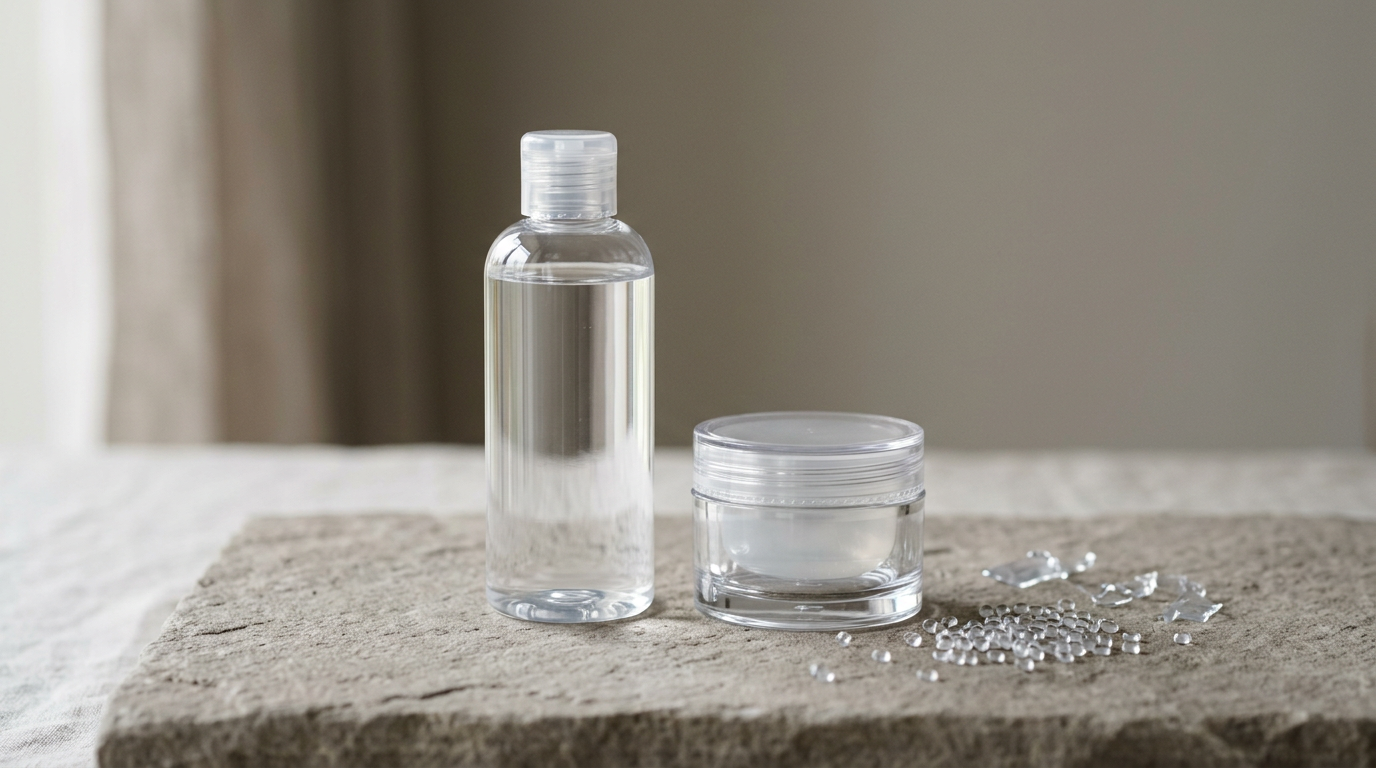
In this post, you have the opportunity to become smarter about PET bottles and PET in general. Plastic has been used for almost 200 years, and we are going to review the benefits that plastic has had for our world. We will explain why we continue to use the material. In addition, we want to give your historical perspective on the first and most used recycled material worldwide. Finally, we introduce you to the processes of recycling packaging materials. Read on and learn more about PET.
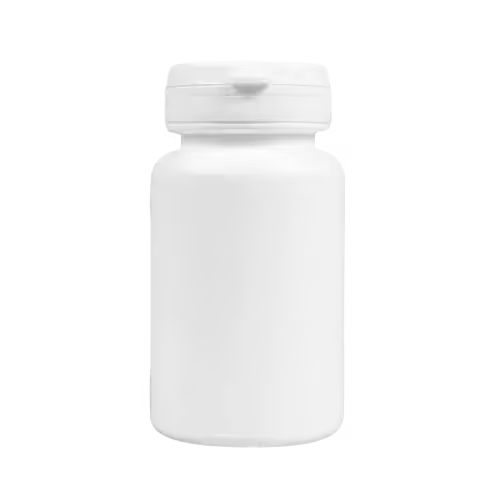
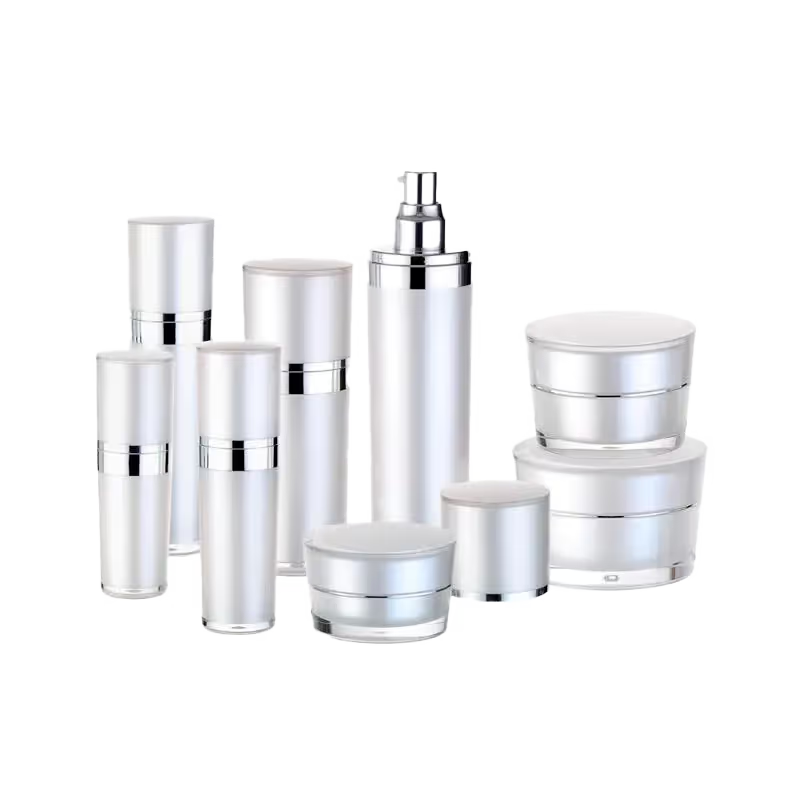
You can also find PET bottles in our product catalog.
Plastic has gained a reputation for being harmful to the environment. But in fact, a world without plastic would possibly create more problems than it would solve. Plastic makes up a much larger part of our everyday lives than we might think. Both wind turbines and solar cells, for example, are made of plastic, and these objects are intended to protect the environment. At the same time, many foods are packaged in plastic, which extends the shelf life. It reduces food waste, which is otherwise a major climate culprit. Therefore, it is better to focus on using plastics wisely, rather than trying to create a world without plastic.
Over time, several methods of recycling plastic materials have also been developed. A number of different types of plastics have also been developed that are more sustainable and less harmful to the environment — including PET.
PET stands for Polyethylene terephthalate. It is a saturated polyester-plastic type with roots dating back to 1940. You know the material from textiles, where it goes by the term polyester. To provide a better overview of PET's origins and background, we have set up a timeline with key highlights of plastic material development below:

PET is resistant and can withstand wear. It is one of the most widely used packaging materials in Europe, since it has good properties in its pure form. This means that you do not necessarily need to add funds to improve or preserve the properties of the material. PET is transparent unlike PE (Polyethylene). PET has good barrier properties, which means that the material can keep a product's aroma and CO2 inside and atmospheric oxygen out.
PET is, as mentioned, a recyclable packaging material. 1 kg of recycled plastic packaging provides up to 2 kg lower CO2 emissions. Plastic packaging can be mechanically reused 6-7 times, after which the quality usually makes itself more suitable during chemical recycling.
Chemical recycling is the terminus of plastics, but at the same time forms part of the circular economy by replacing areas of fossil fuels. In mechanical recycling, the plastic materials are sorted by plastic type, graded, cleaned and remelted. The product can be used for new plastic products and replaces “new” plastic.
In chemical recycling, the plastic is degraded by changing the chemical structure of the plastic. The plastic is converted into shorter molecular bonds, which allows the material to all be used under other conditions. Just like burning for energy use. The constituents typically replace crude oil, gas, or are used in blast furnaces, replacing coal. The cost for this processing of a plastic material is often quite high. You can also read more PET plastic and other types of plastics at sustainabilitygemballage.dk, where you will find videos, articles and much more.
At Packwise, we offer a wide range of sustainable materials and packaging. At the same time, we strive to provide environmentally friendly solutions that suit you and your product's needs.
You are welcome to contact us here for a collaboration. Otherwise you can find much more inspiration on our other site sustainabilitygemballage.dk.
Sources: plast.dk, legsinformation.com and GOP.SE
https://www.youtube.com/watch?v=YyiQ-D9GlXI&t=1s
Do you have any questions for us?
Please do not hesitate to contact us immediately. Contact us here
We have a lot of different products and packaging.
Explore our product catalogue. Go to product catalog

You are always welcome to contact us. Whether it is sparring, a concrete inquiry or ideas for cooperation and development, we are happy to engage in dialogue and look at the possibilities together.





.avif)
.avif)
.avif)