18. April 2022
In this post about The ABC of Packaging We will round off and discuss how the cycle of different materials ends and what the circular economy means for the packaging industry. The circular mindset is simple and it is all about how we make the different materials flow around in a ring, so that we can enjoy our products and materials more than once.
The purpose of thinking materials and products into a circular circuit is that we focus on sorting and recyclability. Especially with plastics, it is useful to sort and recycle. It is therefore important to think about reusability from the start already in the design phase, which you can read more about at our website.
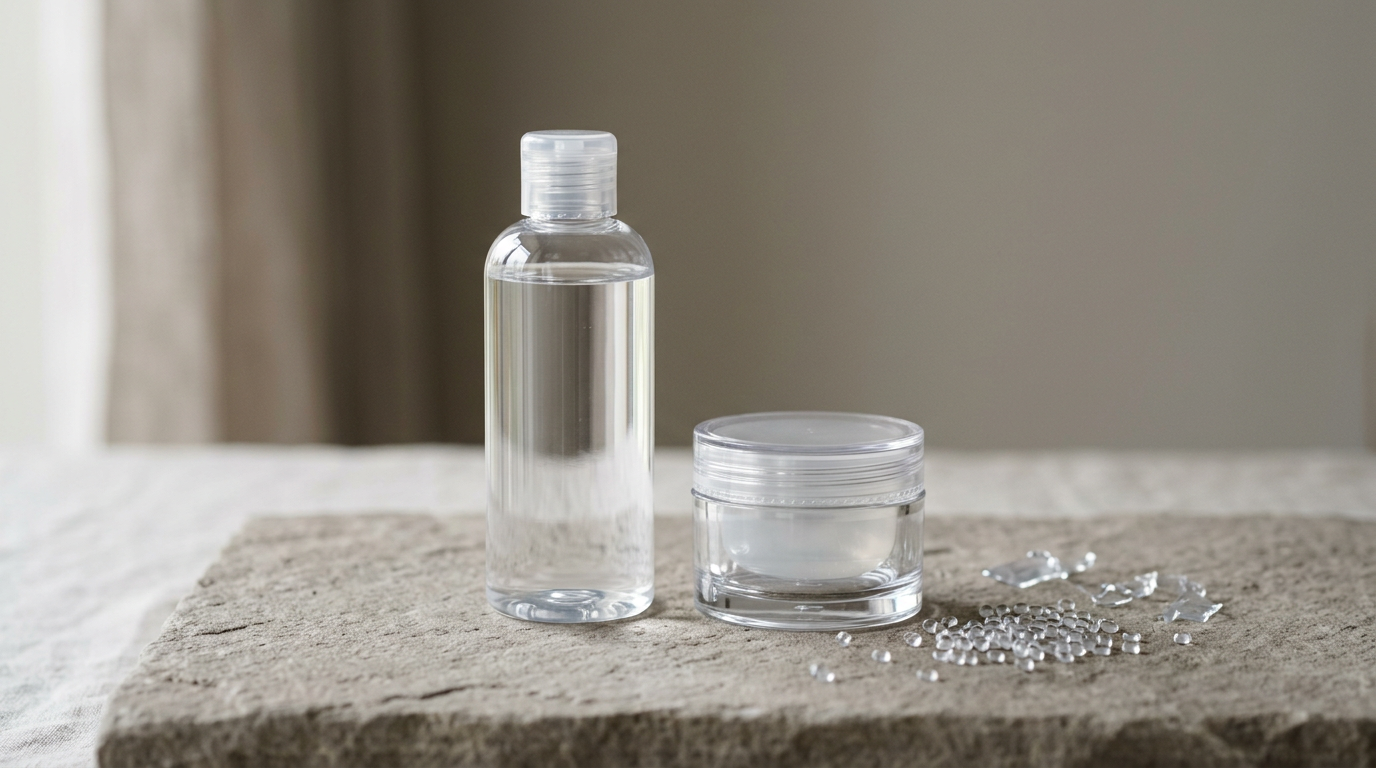
Once a product or packaging has been used, the process will be for the plastic to be collected and sorted. After this, it is cut into smaller pieces and heated so that the small pieces melt. The plastic can then be formed into even smaller pieces, so-called plastic granules, which can be used in new products, including plastic packaging. This is how we can think circular economy into our production of new products.
One way we can help this process along is through extended producer responsibility, among other things.

In Denmark, we have already extended producer responsibility in a number of areas, such as car production and single-use plastics. However, in the coming years, the aim is that the extended producer responsibility will be extended further to packaging in general.
Extended producer responsibility on packaging means that in future it will be the filler, i.e. those who use the packaging for their product, who are responsible for how the packaging is recycled or ends up as waste.
The purpose of the extended producer responsibility is to provide an incentive for companies to use sustainable packaging by passing on the costs of recycling and recycling to producers. Therefore, it is especially important to think sustainable packaging and recyclability from the start when developing and producing packaging.
In Denmark, we have a great opportunity to sort our waste. Specifically, we have nine different ways of dividing up our waste. We sort between food, food cartons, residual waste, hazardous waste, paper, cardboard, metal and last but not least, plastic.
The goal of sorting our waste is very much recycling. It is important that, as best we can, we avoid our plastic ending up in nature and the oceans. If we can design in a way that we think from the outset that our products and materials can be reused and recycled, then we can reduce the amount of waste.
And then we can instead create new materials out of already existing materials, using recycled plastic, so that we can avoid investing in a new production.
When you consider recyclability from the start, it means that we can reduce both the waste of the material itself, but also waste and the damage in nature. By doing this, we avoid plastic waste ending up in the world's oceans.
Today, as such, it is not circular. Some products end up in landfill, others go to biogas and much of our plastic waste goes to incineration. The combustion becomes energy in households, but at the same time this process emits large amounts of CO2.
Although every effort is made to make combustion as sustainable as possible, CO2 emissions cannot be avoided. The burning of waste inevitably goes beyond the environment and that is the part we want to change when we think circularly.
By thinking about sustainable packaging at the start of your production phase, it will reduce the CO2 emissions generated by production and eliminate the packaging itself.
At the end of the day, we need to get better at thinking about the products we make and the materials we use in a circuit with optimized collections and sorting. And only then can we focus on making the production and processing of the existing materials as sustainable as possible.
The ultimate goal of sustainable production is therefore to incorporate the circular mindset already in the design process. You can read even more Circular Economy hereto. In this way, it will be possible to ensure that the products and materials at any time can be sorted in a simple way and can later be recycled after use.
You can get help from us throughout your design and development phase, where we help you with everything from the choice of material, to the design of the packaging expression. You can read more about design and development phase here.
Another goal should be to keep the materials as clean as possible and ensure that few materials are used in each product. In this way, it will be easier to be able to recycle plastics and materials anew and even put them together with other products and materials, since the chemical formula itself will match much better.
If you think in those trajectories, you will be able to create a circular system that can work in the long term. As a starting point, it should be designed to be and remain a powerful resource that can create value for future production. You can read more about circular economy at our post or on Bærdygtigemballage.dk
Do you have any questions for us?
Please do not hesitate to contact us immediately. Contact us here
We have a lot of different products and packaging.
Explore our product catalogue. Go to product catalog
You are always welcome to contact us. Whether it is sparring, a concrete inquiry or ideas for cooperation and development, we are happy to engage in dialogue and look at the possibilities together.





.avif)
.avif)
.avif)