13. April 2022
In our fourth post on ABC Packaging, we continue our series, where we give suggestions and tricks on how to achieve the right packaging design goals and ensure a smooth process in relation to packaging development and packaging production.
Once packaging colors and typography are in place, these must be transferred onto the packaging.
Should the visual identity and product text be printed as a label or should it be printed directly on the packaging?
There are advantages and disadvantages to both methods, and both solutions thus enable different expressions.
In this post, we review different printing methods, the possibilities of label vs. print, and — once primary packaging is in place — what you can achieve with secondary packaging — and why this type of packaging is both practical and value-adding for your brand.
Labels and labels have both advantages and disadvantages associated with them when it comes to packaging.
Advantages of Labels and Labels:
If you choose labels or labels, the great advantage for your packaging is that you do not have to rely on printing variants and the number per printing variant from the start of production.
You can use the same packaging with different labels and labels because it is not integrated into the packaging itself, such as printing or embossing.
Labels are ideal for small product storages and for split testing of packaging designs because they can be produced and delivered in a matter of days.
It offers great flexibility in terms of product and marketing.
Disadvantages of labels and labels:
The disadvantage of labels and labels is that over time they can fray or fall off completely. It will have a negative impact on your identity expression and give the customer a bad impression of your product (and packaging!).

Embossing and direct printing on packaging often give the product packaging a more exclusive look. This is primarily due to the fact that the visual element is directly integrated on and in the product packaging.
The integration provides a whole different packaging experience. At the same time, the identity expression remains intact thanks to the integration. However, this method is often more expensive (than label) and is associated with higher start-up costs and larger print runs.
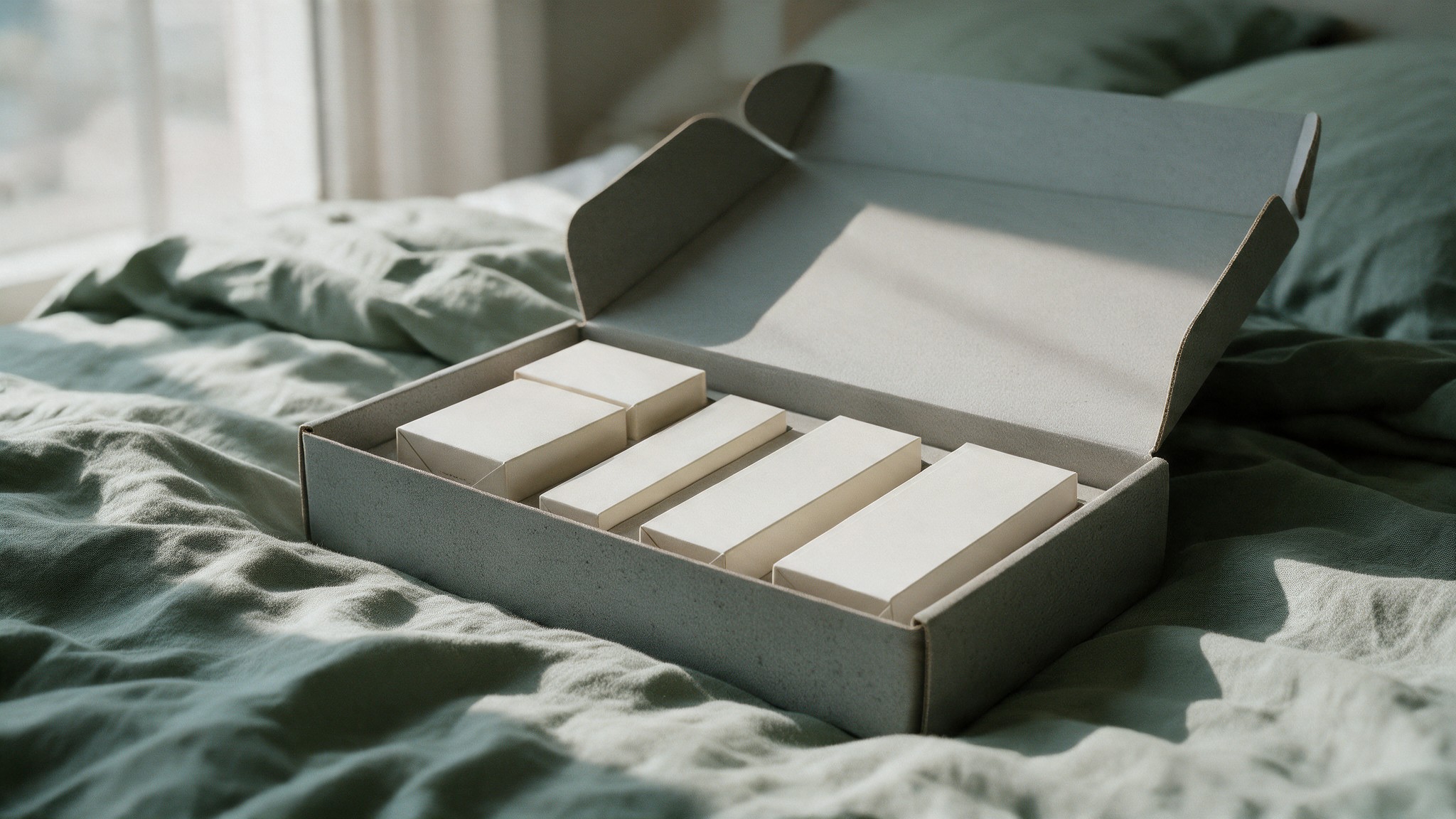
Secondary packaging is the packaging in which the primary packaging is packed, such as a gift box or an additional container to protect the primary product. Another form of secondary packaging is multipack packaging, in which several primary-packaging products are co-packaged.
Thus, the packaging of your packaging does not come into contact with the product contents. Therefore, if the secondary packaging is removed, nothing will happen to the product itself as a starting point.
It is convenient to use a secondary packaging as — as mentioned — it protects the primary packaging and product contents to a greater extent. As long as it does not result in unnecessary and environmentally damaging over-packaging.
At the same time, the secondary packaging can also support brand identity in the form of an exclusive unboxing experience that can add additional value to the product and even help express important messages.
The secondary packaging can be designed in the same style as the primary packaging, or one can break the framework in the form of a completely different packaging design and packaging design. In this way, packaging can help give an extra dimension to product and primary packaging.
For example, elements such as wood chips, parchment paper and the like can be added to the secondary packaging to better embrace the primary products in a multipack solution. It enhances the look & feel solution and provides a complete and well-thought-out overall experience.
In the next post about the ABC of Packaging, we will discuss the different material options and types that you should decide on when designing packaging and developing a new packaging for your product.
Do you have any questions for us?
Please do not hesitate to contact us immediately. Contact us here
We have a lot of different products and packaging.
Explore our product catalogue. Go to product catalog

You are always welcome to contact us. Whether it is sparring, a concrete inquiry or ideas for cooperation and development, we are happy to engage in dialogue and look at the possibilities together.





.avif)

.avif)

.avif)