15. April 2022
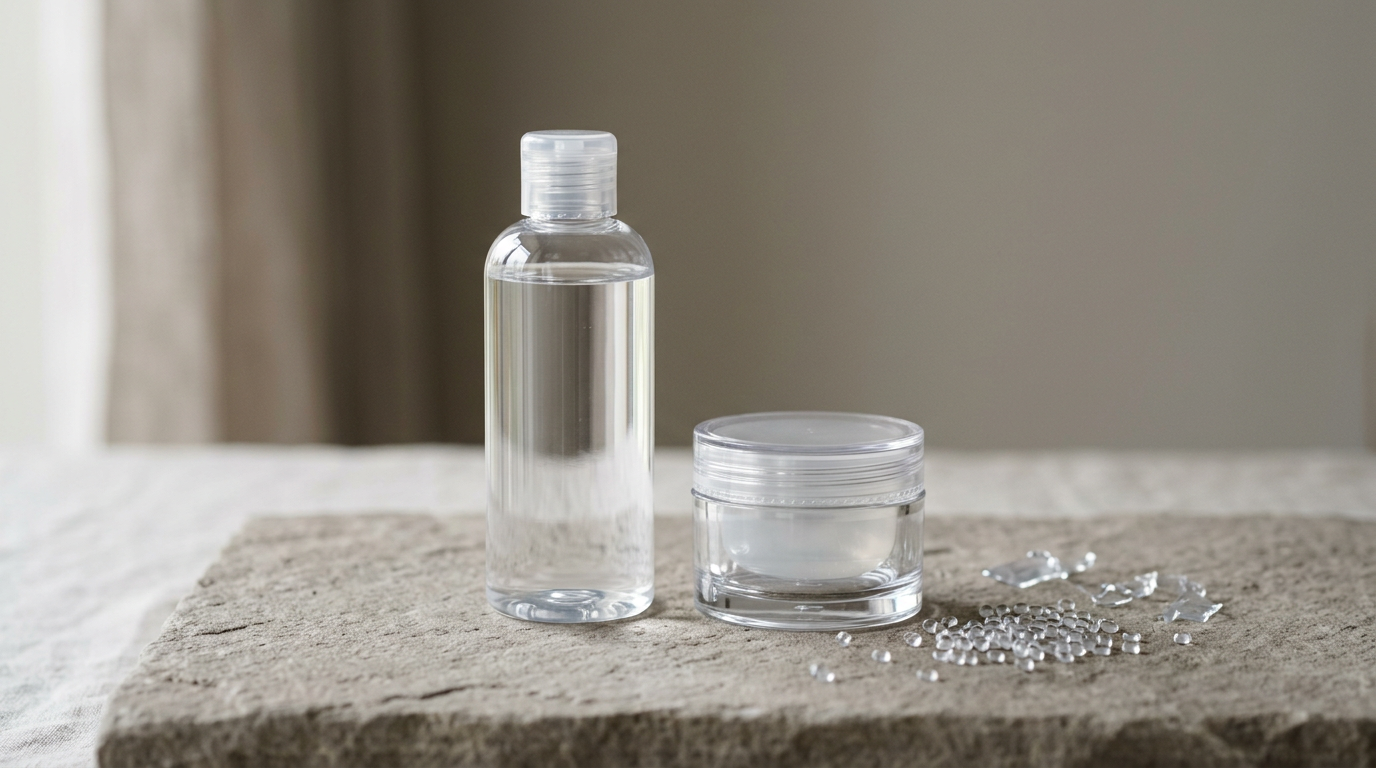
In packaging, a distinction is typically made between primary packaging, secondary packaging, and tertiary packaging. In this post, we present you with a wide range of primary packaging types for sustainable packaging of cosmetics and skin care.
We guide you in your packaging choice by illuminating what you should take into account when choosing a packaging type for your product.
Among other things, you will be introduced to different pump systems; namely the lotion pump and the cream pump, and will become more aware of their functions.
We also highlight airless packaging, which - we at Packwise - believe is the dispenser of the future.
In addition, we elucidate the functional advantages of trigger sprayers, mini trigger and finger sprayers. You can also read about the benefits of capsules and we inform you about two well-known types of packaging, the cosmetic jar (also known as plastic tubs) and the cosmetic tube. Finally, you have the opportunity to become smarter about different types of sealing.
The purpose of this post is to convey the necessary information you need to be able to make the right packaging choice for your cosmetic product. We are, of course, ready to guide you through the process. So if you want to get an overview of the different packaging types and you would like to become more knowledgeable about the choice of packaging for your product, read on here.
In order to be able to choose the absolutely correct type of packaging for your cosmetic product, there are several different factors that should be taken into account and evaluated. First and foremost, viscosity is paramount to whether the packaging will work optimally for an arbitrary product content.
Viscosity is a term for how resistant a liquid is to flow. We are talking about the thickness of a liquid when it comes to viscosity. High viscosity denotes a viscous liquid, whereas low viscosity denotes a thin liquid.
Once viscosity is identified, it is also important to assess on how large surfaces a product content should be applied. This also affects which type of packaging will work best for the product content.
In the following points, we will introduce you to different packaging types - what works best for a given surface with a given viscosity - so that you are ready to make the decisions that suit both identity, product and product content.
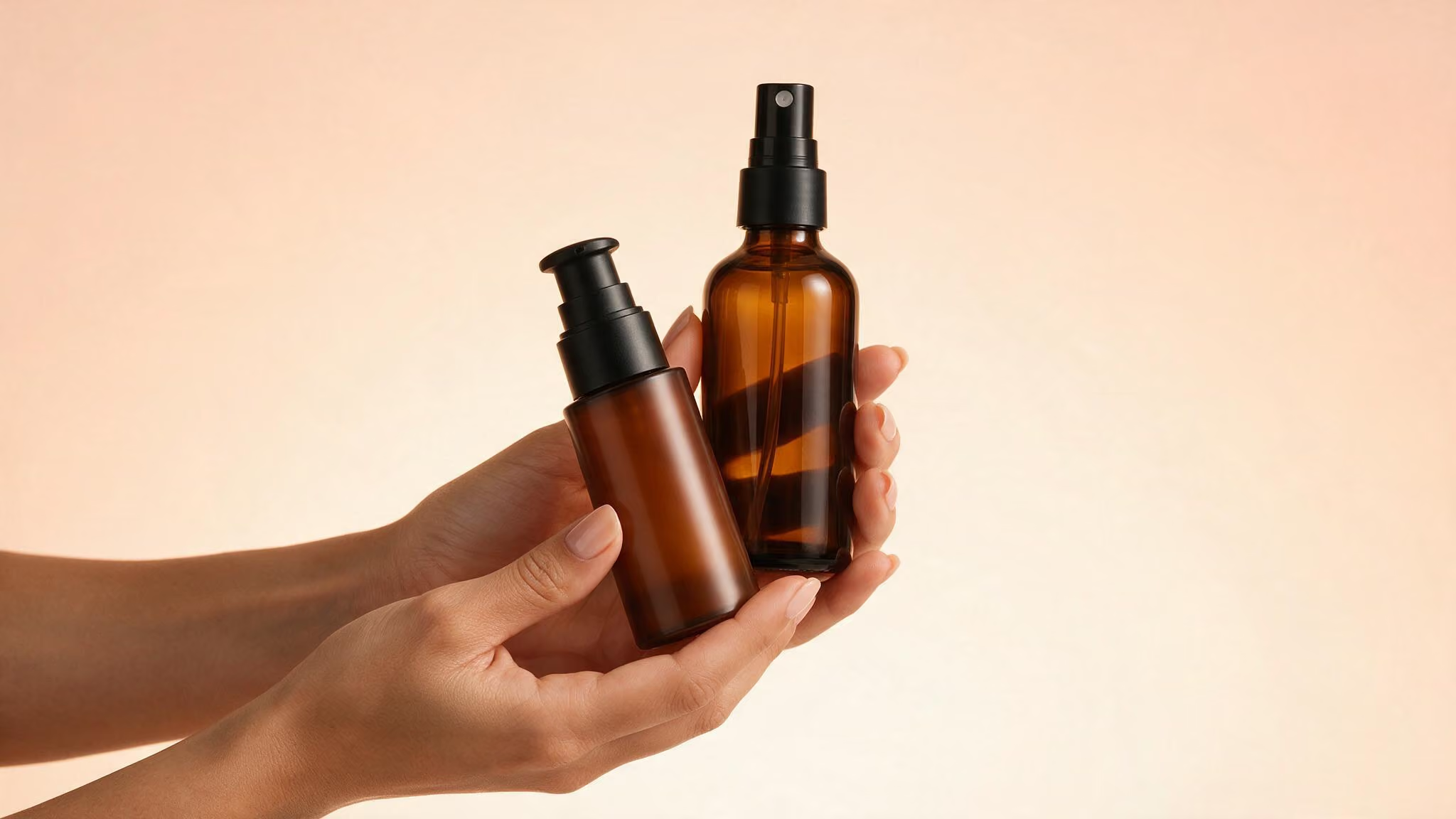
The lotion pump (with associated bottle) is an open pump system. The lotion pump can be unscrewed on and off the packaging and works by pressing the pump head. Under air pressure in the container, the product contents are pumped through a riser, dosing the desired amount. The pump is best suited for liquids of medium to high viscosity. However, the lotion pump is also widely used for disinfectant liquid (hand sanitizer).
For low-viscous products, such as hand sanitizer, the output will often be more difficult to control and the contents will be more dosed by a “splash” rather than a more controlled output known from hand soap.
Lotion pumps are produced with different pump housing-size that determines the dosage amount of the content in question.
The structure of the lotion pump (open pump system) prevents total tightness, and the product contents will therefore be exposed to oxygenation and may/will reduce the life of the product. The lotion pump is in the fixed assortment of companies that produce personal care products, and this type of packaging is often used for everything from hand soap, body and hair shampoos, as well as hand and body creams.
The lotion pump can be supplied in several bottle thread sizes and with different pump head and bypass. It can be supplied with and without metal spring (material composition), in all pantone colors and with a dosage output suitable for most purposes.
See our lotion pumps here
The cream pump (with associated bottle) is also an open pump system and differs from the lotion pump in that it is typically intended for smaller bottle sizes where less output is desired. This type of packaging also works with pressure on the pump head (negative pressure in the packaging), whereby product contents are passed up through risers and dispensed.
As mentioned, the cream pump usually has a smaller output than the lotion pump. It therefore works best for products that require a smaller and accurate dosage. Medium viscosity products will typically be best suited for this type of packaging.
Cream pumps are often seen on products such as eye and face creams, as these are areas that require a more careful application. The impeller of the cream pump is often seen with metallic finish and also frequently with logo display - this helps to give the packaging an exclusive look and a tactile experience typically seen in high-end products.
See our cream pumps here.

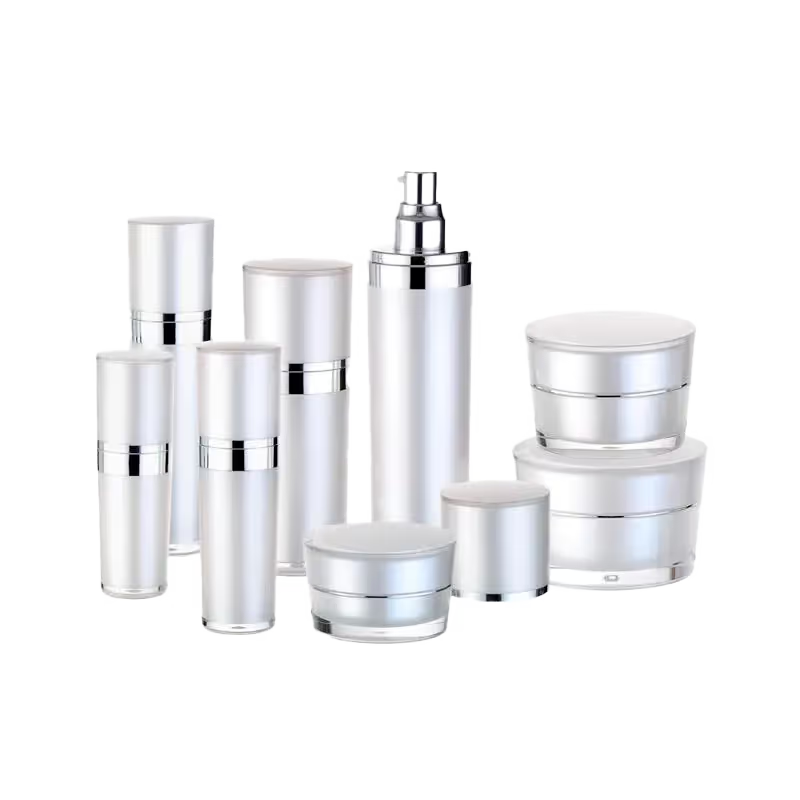
Airless packaging - airtight packaging - is developed on the basis of a relatively new technology (closed pump system), where pump and bottle are not purchased and combined separately, but form a single solution.
Unlike most other packaging, it is not the riser that leads the product contents up to dispensing, but rather a closed system with a movable disc. The disc is integrated inside the container itself and moves by dosing pressure from the bottom of the package up towards the top by means of vacuum. With each pressure, the packaging sucks a little air into the bottom, thereby creating a vacuum over the disc where the product contents are located.
The design makes it possible that the contents do not come into contact with oxygen, but rather are isolated. This is essential for products with active ingredients, as oxygenation reduces the life of active substances in a cosmetic product.
The airless dispenser consists of a pump with lid and bottle, which is supplied separately, but when the parts are assembled, due to the design, they will already be sealed at the first pump and the vacuum air intake is created - quite naturally.
The airless pump is often considered the exclusive packaging choice and is most often used for high-end products and brands. Typically, the unit price of this cosmetic packaging will be higher than that of the packaging solutions mentioned before.
The advantages of Airless packaging for cosmetic products:
Despite the typically higher unit price, there are a number of advantages to this type of packaging that we at Packwise believe are and will be attractive to both businesses and the end user:
See our airless packaging here.
A trigger sprayer (with associated bottle) is also an open pump system. It has a removable screw cap, which works with risers that dispense the product contents in spray form. A parallel can be drawn to the phrase “pull the trigger” when talking about trigger sprayer packaging.
The dispensing is done by lightly pressing the trigger with your finger, i.e. the trigger part, so that the product contents are “fired” when dosing.
This type of packaging is ideal for atomizing a product on a wide surface with a larger output. Packaging is especially used for cleaning products such as glass cleaner or rim cleaner because there is a need for the product to be applied as a wide range over a larger area.
Trigger sprays come in many different design configurations, with and without child restraint, and can typically be supplied in all pantone colors.
See our trigger sprayers here.
The mini trigger sprayer (with associated bottle) can rightly be called the trigger sprayer's little sister. It works in the same way, with the “Pull the trigger” mechanism as the focal point of the dosage.
The packaging, on the other hand, is equipped with a slightly smaller body, a different design look and a smaller output than the above. This makes the function ideal for all hairdressing and styling products. Also the mini trigger can be supplied in several sizes, colors as well as with and without trigger fuse.
The finger sprayer is also used with a bottle and has the same function as both trigger sprayer and mini trigger sprayer, however both the packaging and the output are significantly smaller than the other two packaging types.
A finger sprayer, also called mist sprayer, also differs in appearance from both the trigger and mini trigger sprayer in that the pump head has a completely different design and operates by downward pressure on a finger-shaped spray head on top of the packaging.
The output is still dosed as atomization - just on a smaller surface. This makes the packaging particularly suitable for cosmetic products such as setting sprays and mists for the face because it atomizes the product contents to a limited extent that is suitable for the face size.
The finger sprayer is available with different spray image, with and without over-cap and can be supplied with metallic finish and pantone colored.
All three types of sprays (trigger sprays, mini trigger sprays and finger sprays) are best suited for low-viscous products, i.e. product contents that are thin liquid, because the dosing technique in the packaging atomizes into fine “clouds”.
This also makes the packaging suitable for disinfecting products and cleaning products with an aqueous consistency, as they most often have to be dosed in controlled but on larger surfaces.
See our finger sprayers (mist sprayers) here.
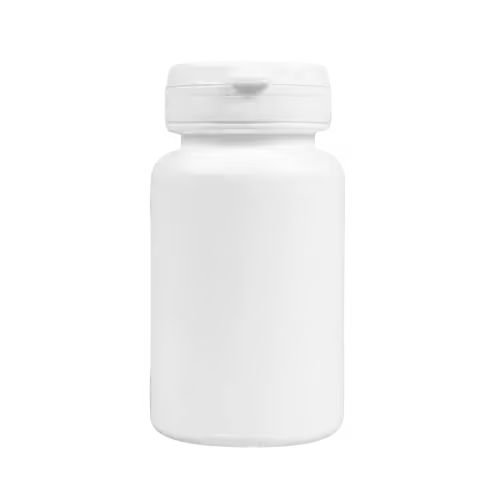
Capsules come in many shades and come in virtually all materials and sizes for both small and large bottles (containers). Both as screw capsule, flip top capsule, disc top capsule and special capsules developed for e.g. hair coloring products and scalp treatment.
The capsule is typically the cheapest packaging variant.
Another advantage of the capsule is that it is often produced in so-called monomaterials. That is, it consists of only one material, making it a favorite in the green economy when it comes to waste sorting.
The capsule allows up to very large amounts to be dosed at a time, with typically no output limitation. Conversely, this makes the product difficult to work with if a controlled, uniform or smaller amount of output is needed — unlike the other packaging types with a predefined dosage. The capsules are suitable for products with both low, medium and high viscosity.
The flip top capsule and disc top capsule with associated container/bottle are used for everything from face cream, hand and body cream, as well as hand sanitizer with a gelatinous consistency, especially in handbag-size.

The cosmetic jar - or cream jar - is a well-known packaging with a wide range of applications for everything from body scrubs to body and face products.
The cosmetic jar is produced in several materials, but is often seen both in plastic, glass and metal. A distinction is often made between single wall and double wall jars, with the latter typically seen used for premium brands.
The bottom and top - i.e. jar and lid - can be produced in two different materials (and colors), creating a dynamic design.
Since the bottom and top can be easily separated, the cometary jar, despite the different materials, is still easy to sort waste. Typically, cosmetic jars are produced in the “product family”, i.e. similar designs in a wide size range that allows packaging for both the small face cream and the large body scrub from the same series.
As a rule, the product content in a jar is dosed with claws five, in which the product contents are exposed to human bacteria that reduce the effect of the active substances of the product.
The cosmetic jars are also available as airless packaging. The technique is exactly the same as the aforementioned airless dispenser; the packaging is merely in jar form.
Last but not least, there is also the cosmetic tube, which can almost be considered a container with a resealable.
The cosmetic tube also doses the contents of the product by pressure on the tube, except in the case of the airless tube, where the tube is equipped with a pump function and acts as the airless bottle.
Tubes for cosmetics can also be produced with different dosage outputs and thread sizes, as well as being produced and supplied in all pantone colors.
Tubes are usually used for highly viscous liquids, since liquids with too low viscosity — due to gravity and the fact that the tube is most often “upside down” — and the product will then flow out of the packaging.
Sealing is used for several different types of packaging and is a way for manufacturer, retail and consumer to obtain assurance that the product is unopened and not put into use.
It creates a certainty for the consumer to know that the seal is intact and the product is therefore unused when it is taken down from the store shelf and finds its way to the consumer's basket.
Seals are seen, for example, as safety seals/labels (a form of band-band) that break when you unscrew the lid of a bottle. Another widespread form of sealing is packaging sealing, in which a thin, often transparent plastic film must be perforated before the product can be used.
When considering sustainable product types, it is important to know and understand that in the different types of packaging there are parts that each require a different procedure, or are made of different types of materials.
Here it is therefore important that for each part and element you think about the different processes so that your product can be as sustainable as possible.
We hope that with this post you have become much more aware of which packaging and dispenser solution to choose for your product.
The possibilities are many, and in relation to developing just that unique packaging solution, you can read much more here about the importance of color in packaging design, the importance of text style, about the different material options and about end-of-life considerations.
Do you have any questions for us?
Please do not hesitate to contact us immediately. Contact us here
We have a lot of different products and packaging.
Explore our product catalogue. Go to product catalog
You are always welcome to contact us. Whether it is sparring, a concrete inquiry or ideas for cooperation and development, we are happy to engage in dialogue and look at the possibilities together.





.avif)
.avif)
.avif)